Burnet grad MaeSyn Gay represents US while playing basketball against Brazil
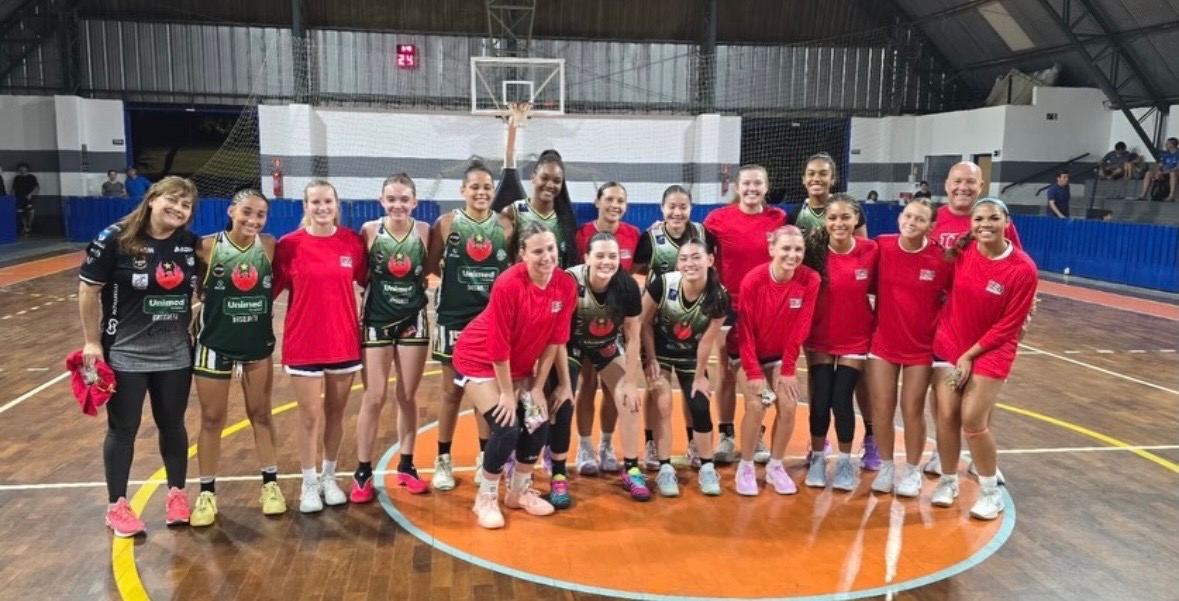
CAPTION: Burnet graduate MaeSyn Gay (front row, right) was one of 16 American basketball players invited to represent the United States in four games against Brazilian teams. Courtesy photos
Burnet High School graduate MaeSyn Gay said yes to an honor most dream of – representing the United States as an international athlete.
Gay, a 2024 graduate, traveled to Brazil with Team USA and spent a week there playing in four games in mid August.
“It was it was such an incredible experience, and I wish I could relive it all over again because it was fun,” she said. “All my teammates there were from different states who I would have never met and now they’re going to be some of my closest friends for the rest of my life, which is so cool because we got to share that experience all together.”
She received the invitation to play in January when she was playing for the Hardin-Simmons University Cowgirls along with teammate Jacqueline Berry.
The invite came from Ron Smith, the president and founder of USA Sports Tours and Events.
“He has been doing this for about 16 years,” Gay said. “He just loves (NCAA) Division III basketball. He says there are always some hidden gems in there. He’s wanting to do something for Division III because they don’t have things like this. And so he recruits all across the country and handpicks his players, and we go and play some teams in Brazil.”
Gay had to raise the money to pay for her portion of the trip. Burnet businesses contributed to the fund and she offered a basketball camp with the proceeds going to that.
“I raised more than I needed, so I got to have some little spending money which was so cool,” the said. “I got some little souvenirs.”
The U.S. team played four games, two in one day, “which I haven’t done in many years. So my body was not used to that, not since high school tournaments,” the former Lady Dawg said.
Just like in other international competitions between countries, players exchanged gifts before tipoff.
“We got bracelets and we got candy, different little things,” Gay said. “At the end of the game, we traded shirts with them. They always didn’t bring shirts, which was totally OK, but we got to give them our university or team jerseys. The reactions and the thankfulness that they showed was absolutely my favorite. Getting to talk with or at least try to communicate with them — some spoke pretty good English, some spoke zero. It was straight for Portuguese. I didn’t know a lick of it. The language barrier was hard but after the game, it was just really cool how excited they were. We all go to small schools that people in America don’t even know about, so the fact that they thought we were so cool, that was pretty cool.”
Gay, who was moved to the perimeter and point guard for the international games but normally plays center in college, chuckled when asked about the scores of the games.
“We handled ourselves pretty well,” she said, adding the 16 Americans were split into two teams.
CAPTION: MaeSyn Gay (left), Ron Smith, the president and founder of USA Sports Tours and Events, and Jacqueline Berry.
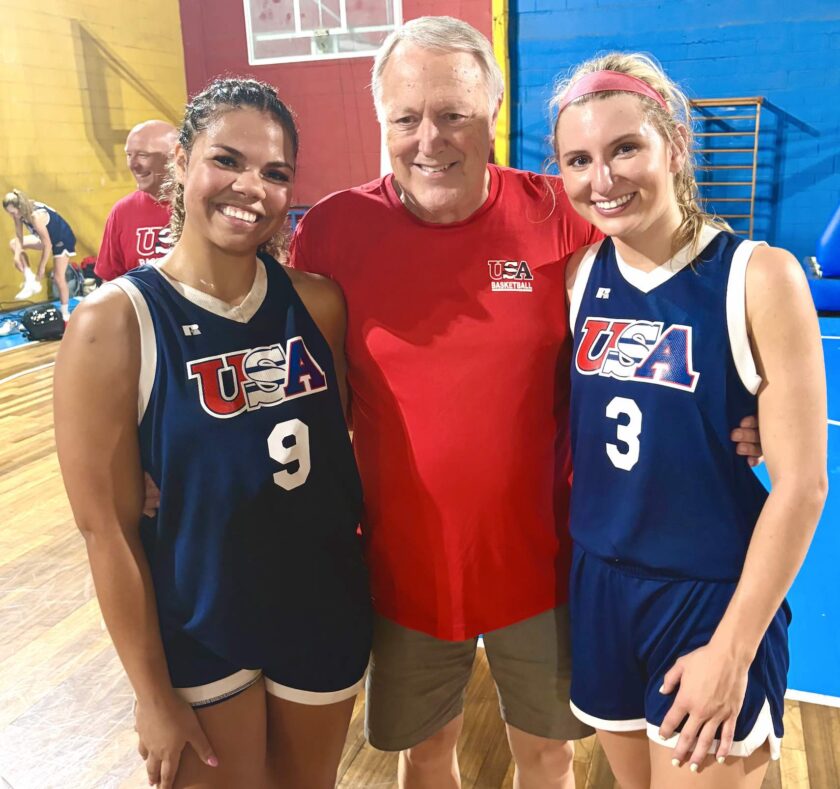
She noted the Brazilian players were a mix of high school and college-aged athletes, from 17 to 40 years old, adding basketball is a niche sport.
“We did play one woman who was on the Brazilian national team, so that was pretty cool,” the former Lady Dawg said. “Brazil doesn’t have a lot of schools, they don’t have a lot of public schools or good schools. So they only have sports teams and different clubs these women join and just want to be a part of the game they love, which is really special. They’re all doing it because they want to. These women and girls were doing it because they love the game. We just got to meet a lot of different people. They were just so fascinated by us because we played at the university, and it was just really special that they thought we were just celebrities basically because we played basketball at a university, which seemed so small here.”
After one contest that did not include Gay’s team, the Americans saw the conditions and came to a conclusion.
“They played in this really, really poor neighborhood, one of the poorest in Rio,” she said. “The girls on the red team were giving them their socks off their feet that they’re wearing, and they were so excited because they were Nike socks that they will never, ever get to have. We gave them our USA plastic water bottles. One girl gave her Kobe (Bryant) basketball shoes to one of the girls. She cried because she got Nike basketball shoes. That was my favorite part, just to see how excited they were and grateful.”
But the trip wasn’t only about playing.
“Not only did we get to play some games, we learned about the culture and the differences between both our cultures and experience life in Brazil and get to do tourist stuff, too,” Gay said. “Be girls who are getting to experience a different country, and so it was incredible. I have no words.”
They experienced São Paulo, which is referred to as the “New York City of South America” because of its skyscrapers, food scene and urban energy that includes economic, financial and cultural elements.
“It’s larger than Los Angeles,” Gay said. “It’s the second largest city in the western hemisphere.”
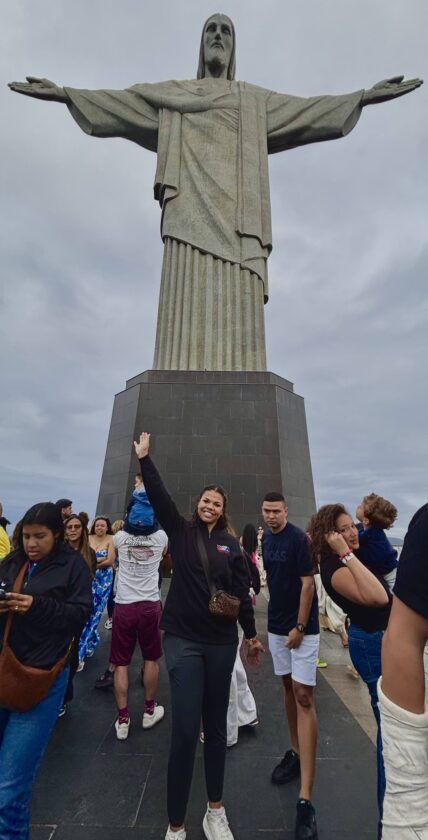
And then they flew to Rio de Janeiro. Stops included Sugarloaf Mountain, a peak that resembles a concentrated block of refined sugar, the Selaron Steps, which have more than 2,000 brightly colored tiles from 60 different countries and one from Texas, and Christ the Redeemer, which the athlete said photos and videos don’t do it justice.
“It was 98 feet tall,” she said. “It was beautiful. We walked up to the final steps, and it was just breathtaking how beautiful. The weather was amazing.”
The Americans avoided drinking the water and had to get used to playing on courts in buildings that relied on Mother Nature to provide airflow. Still, Gay wouldn’t trade the trip.
“It was the most incredible experience I’ve ever had in my life,” she said. “It was so cool, it was so awesome. I don’t think I ever thought I would be able to do that or get to experience that. So it just meant the world to be able to represent something that everyone wants to be a part of. We’re from America, the place everyone wants to be. I just thought that was really awesome, really rewarding.”
CAPTION: MaeSyn Gay (center) sees Christ the Redeemer in Rio de Janeiro, Brazil.